What a dock canopy keeps dry
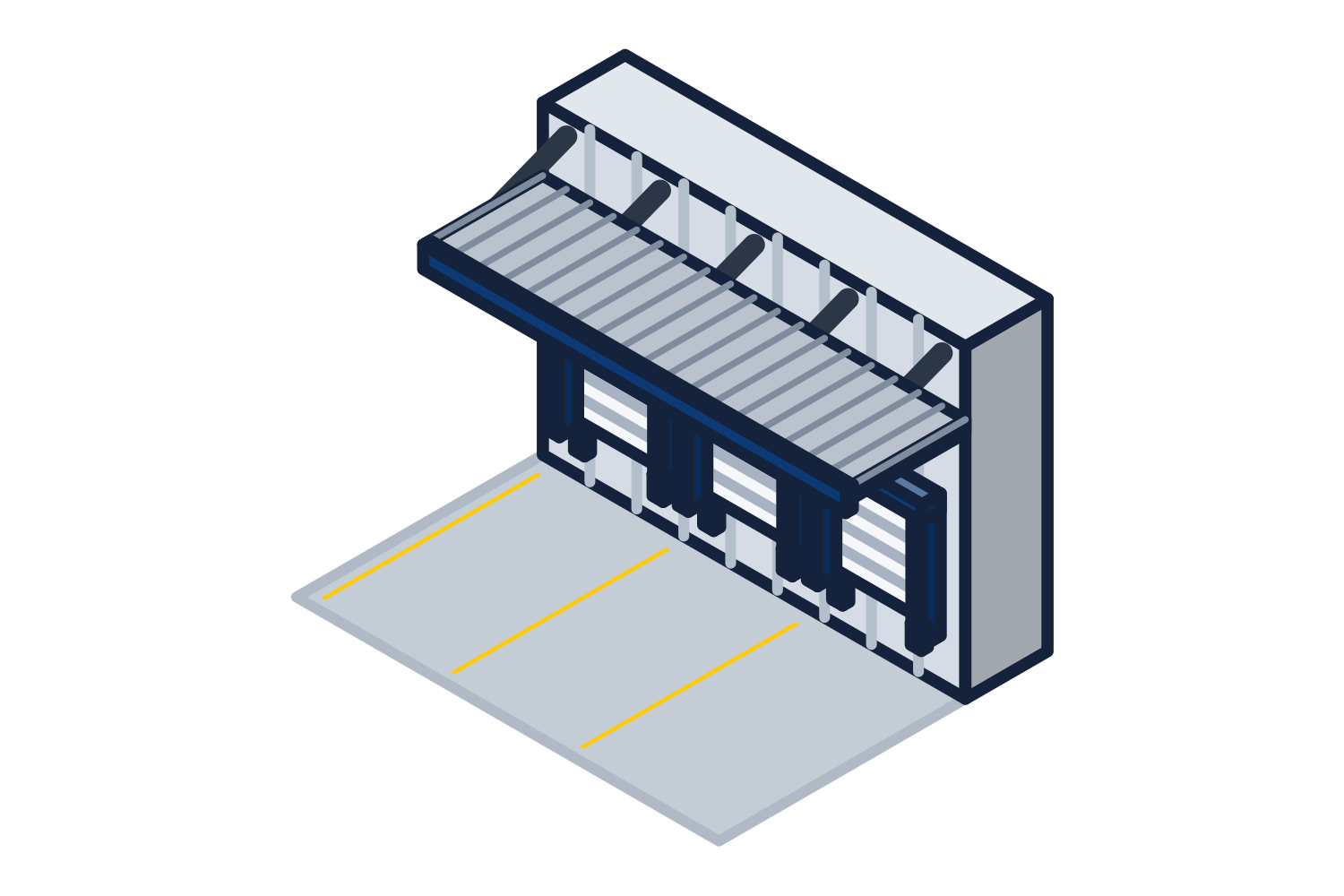
A dock canopy projects from the building wall over the dock doors. How far it projects decides what it protects.
- The gap between the trailer and the wall, where rain otherwise runs down into the door opening
- The dock leveler and the plate, which forklifts cross and which are slick when wet
- The rear of an open trailer and the freight at its tail
- Flatbed and side-loaded trucks, where the whole load is exposed while it is handled
- Dock stairs, the personnel door, and the people who work outside
- The apron itself, where a deeper truck canopy covers staging or cross-loading
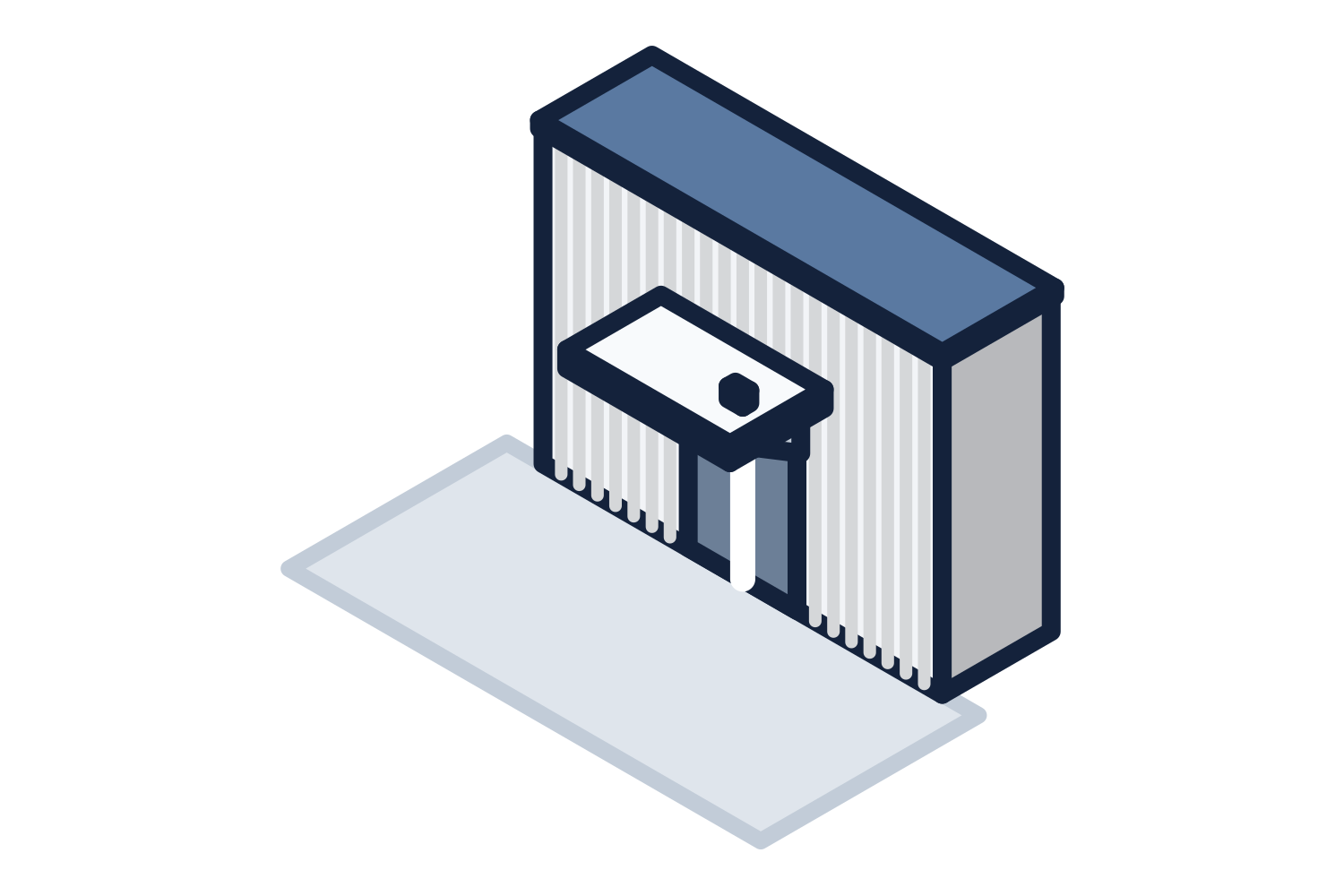
Representative drawing of the equipment type, not the exact configuration quoted.
Truck clearance
The canopy has to clear the tallest vehicle that will ever back under it, with room to spare. That vehicle sets the height, not a catalog. Find out what uses the dock now and what could later: the tallest trailers, refrigerated units with equipment on the nose, and trucks with raised bodies or tailgates.
Two things make it harder than it sounds. The apron often slopes, so a trailer tilts as it backs in and its top corner comes closer to the wall and the canopy. And snow and ice build up the pavement over a winter. Give us the apron grades with the request. If the lane is a fire access route, the fire department has a clearance requirement as well.
Wall hung, cantilevered, or on columns
A shallow dock door canopy or loading dock awning can hang from the building wall or cantilever from it, which keeps the apron free of posts. Either way the wall carries the load, and on a metal building or a tilt-up panel the wall has to be checked or built for it.
A deep canopy needs columns out on the apron. That is where trucks maneuver, so column placement and protection matter as much as the structure.
| Support | Where it fits | What to settle |
|---|---|---|
| Hung or cantilevered from the wall | Shallow cover at the doors, with no posts on the apron | Whether the wall and the building frame can take the load |
| Columns between dock positions | Deeper cover over the trailer tail | Column spacing matched to the door spacing, and impact protection |
| Free-standing with columns beyond the trucks | Full cover over flatbeds, staging, or a drive-through lane | A longer span, larger foundations, and truck turning paths |
Protecting the columns from impact
A canopy column on a truck apron will be hit eventually unless something stops the truck first. Protection is part of the design, not an afterthought.
- Place columns on the lines between dock positions, never in a backing path
- Set them back from where trailer corners swing during a turn
- Protect each one with bollards, concrete piers, or guards, normally supplied by the site contractor
- Raise the column base on a concrete pier where that suits the site
- Mark columns so drivers can see them in mirrors at night
Snow sliding and drifting from the building roof
A dock canopy sits below a taller wall, and that changes its snow load. Wind carries snow off the building roof and drops it in a drift against the wall, right on the canopy. On a sloped building roof, snow can also slide off the eave onto the canopy below.
The building code and the load standard it references cover both cases, and the engineer designs the warehouse canopy for them. The loads near the wall can be much higher than the ordinary roof snow load for the area. To do it properly we need the height of the wall above the canopy, the roof slope and direction, and the roof size. Tell us also where the building's own roof drainage discharges, so it is not dumped onto the canopy without a plan.
Canopies, dock seals, and dock shelters
A canopy and a dock seal do different jobs. A dock seal or a dock shelter closes the gap around the trailer at one door, to keep weather and outside air out of the building while the door is open. A canopy is a roof over the whole dock face. It keeps rain off everything below it and seals nothing.
They work well together. The canopy keeps water from running down the wall and onto the top of the seal or shelter, which is where those products are most likely to leak, and it shades them from the sun. Line Item Supply also supplies dock seals, shelters, and levelers, so the dock equipment and the canopy can be quoted together and checked against each other for projection and height.
How a loading dock canopy is quoted
Canopies are supplied through contractors. We quote the general contractor or the design-builder from the drawings or a sketch. Owners and facility managers are welcome to ask for budget and design help, and we will ask who is building it.
Each canopy is engineered for the snow, wind, and seismic loads at the job site, with stamped drawings and calculations where the jurisdiction requires them. Foundations are by others, designed from the reactions. Freight to the job site is included in every quotation, and installation can be quoted as a separate line on request.
- Number of dock positions and the door spacing
- How far the canopy should project
- The tallest vehicle served and the apron grades
- Wall construction and height above the canopy
- The building roof slope and where its drainage goes
- The job site address