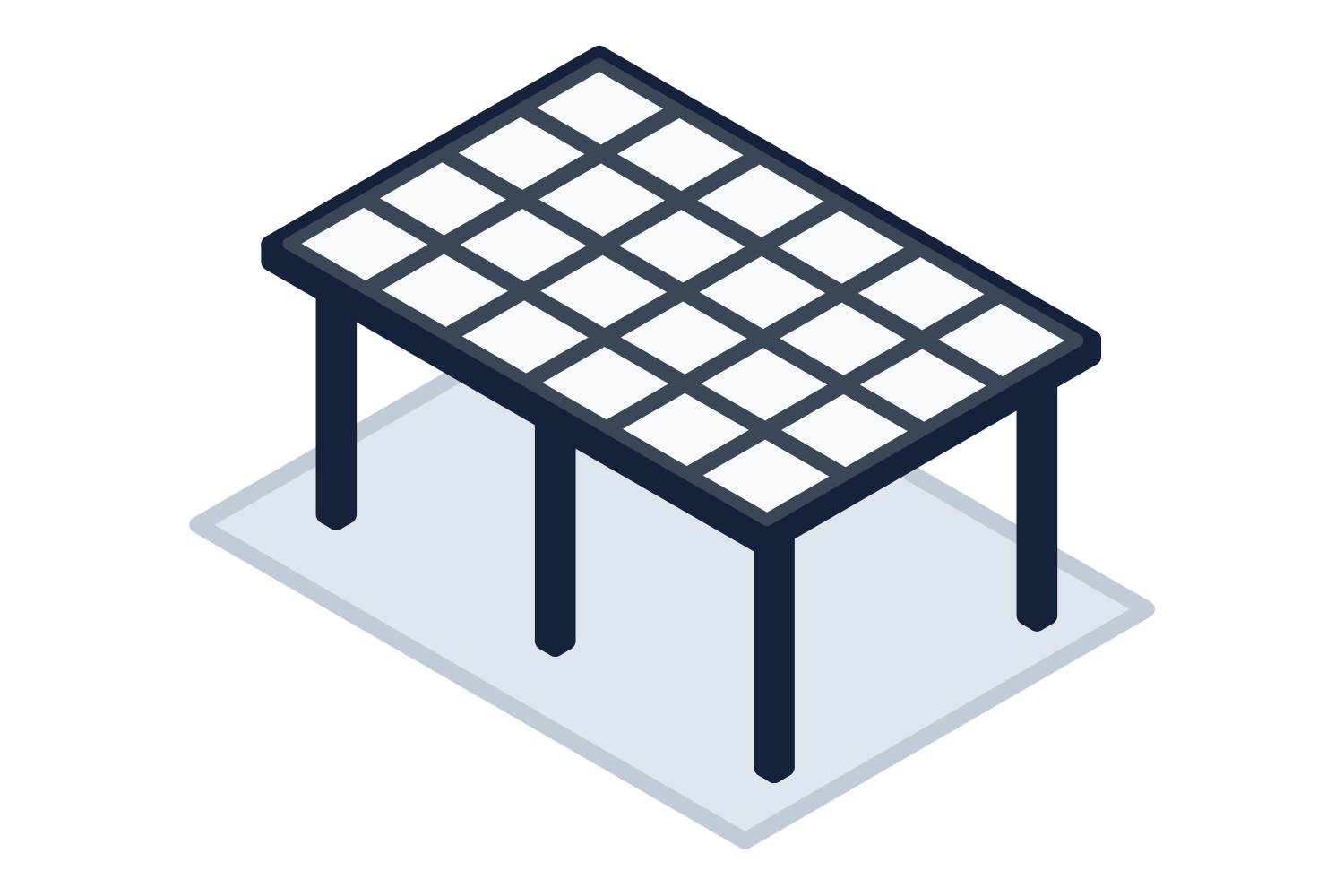
Multiwall and solid polycarbonate
Polycarbonate for a canopy roof comes in two forms. Multiwall, also called structured sheet, is extruded with two or more skins joined by internal ribs, so the sheet is mostly air. Solid, or monolithic, sheet is one piece of plastic all the way through, like a pane of glass.
Multiwall is light for its stiffness and spreads the light that passes through it. Solid sheet can be as clear as glass and can be formed to a curve. A polycarbonate canopy can use either, and the choice is mostly about how the light should look from below.
| Item | Multiwall (structured) sheet | Solid (monolithic) sheet |
|---|---|---|
| Make-up | Two or more skins with ribs and air cells between them | One solid sheet |
| Look from below | Diffused, with the rib lines visible up close | Clear or tinted, with a view of the sky |
| Weight | Light for its stiffness | Heavier for the same area |
| Light | Soft and even, with less glare and softer shadows | Direct, unless a tint or a diffusing finish is chosen |
| Usual fit | Covered walkways, school and transit shelters, long runs | Entrances and feature canopies where a glass look is wanted |
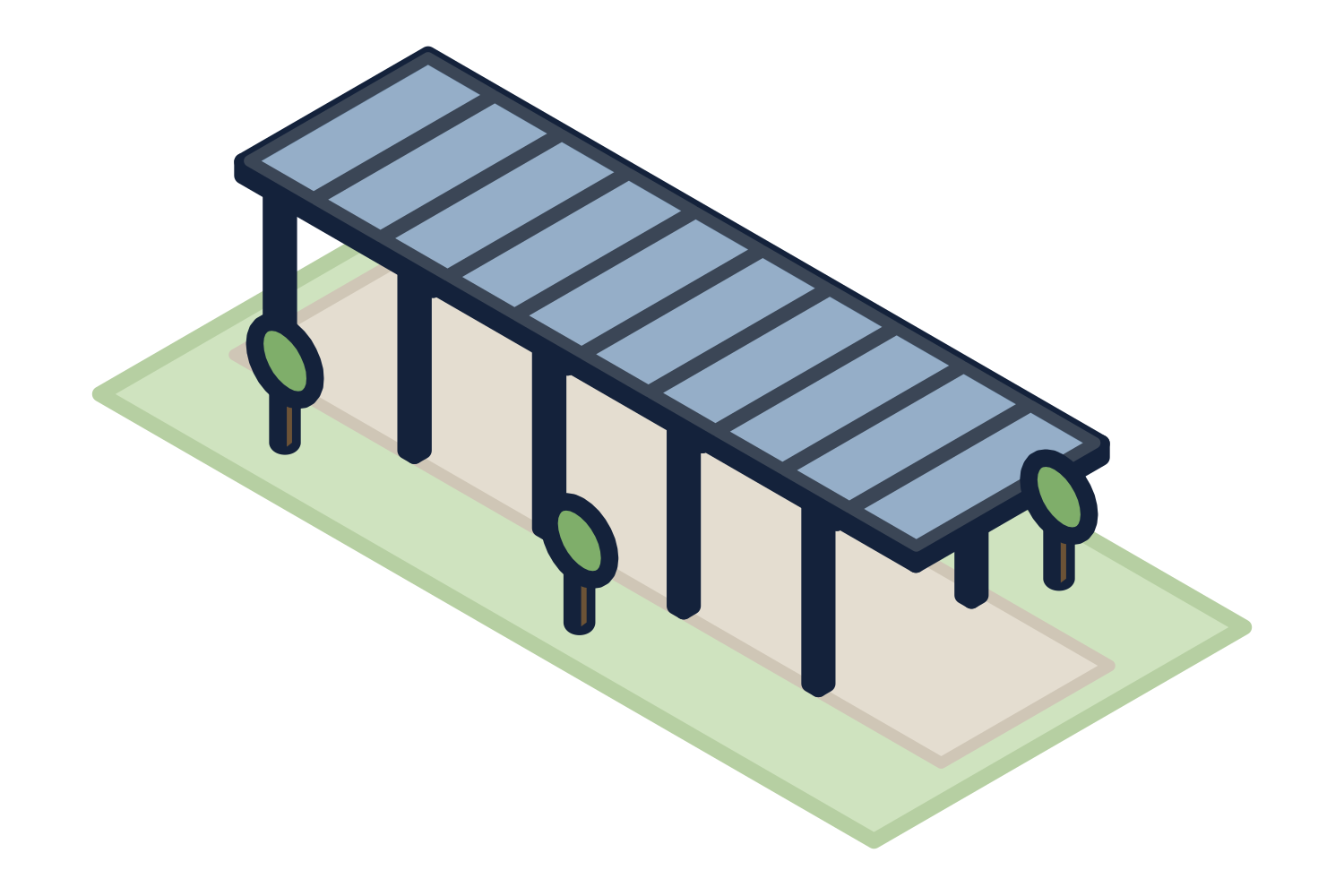
Representative drawing of the equipment type, not the exact configuration quoted.
Diffused daylight under the canopy
The reason to choose a translucent canopy is the light. A daylighting canopy keeps a walkway, an entrance, or a waiting area bright during the day without fixtures running, and it does not darken the windows and doors of the building behind it the way an opaque roof does.
How much light comes through depends on the sheet, its color, and its finish. Clear lets the most through. Opal and white diffuse it. Bronze, gray, and other tints cut glare and heat. The product data states the light transmission for each option, and the architect picks from that.
- Clear: the most light, and the most glare and heat in full sun
- Opal or white: even light with no hard shadows
- Tinted: less glare and less solar heat, with a darker look from below
- Colors: available where the design wants the roof to be a feature
Impact resistance and the UV-protected surface
Polycarbonate is used overhead because it is very hard to break. It stands up to hail, thrown objects, and the bumps of installation far better than glass or acrylic does. That is why it is common on school, transit, and public canopies.
Sunlight is what ages it. Sheet made for exterior use has a UV-protective layer on the outer surface, and some sheets have it on both. The protected side faces the sun, and the sheet is marked so the installer knows which side that is. The sheet manufacturer's warranty states what is covered and for how long.
Polycarbonate is a plastic, and the building code has its own rules for light-transmitting plastic roofs. The design team checks them for the building and the location.
Framing and glazing details
The sheet is carried by a steel or aluminum frame and held in a glazing system made for it. Polycarbonate grows and shrinks with temperature more than metal does, so the glazing system holds the sheet without pinning it. A sheet that cannot move will bow or crack at its fasteners.
- Support spacing follows the sheet and the snow and wind loads at the job site
- Open ends of multiwall sheet are closed with tape and caps to keep dust and insects out of the cells
- The roof is sloped or curved so water runs off to a gutter or a free edge
- Barrel vault roofs suit polycarbonate well, because the sheet can follow the curve
- Cleaning is with mild soap and water, since solvents and abrasives damage the surface
How a polycarbonate canopy is quoted
Canopies are supplied through contractors. We quote the general contractor or the design-builder from the drawings or from a sketch. Owners and architects are welcome to ask for budget and design help, and we will ask who is building it.
Each canopy is engineered for the snow, wind, and seismic loads at the job site, with stamped drawings and calculations where the jurisdiction requires them. Foundations are by others and are designed from the reactions. Freight to the job site is included in every quotation, and installation can be quoted as a separate line on request.
- Plan size, the clear height wanted, and the roof shape
- Free-standing, attached to a building, or both along its length
- Multiwall or solid sheet, and the color or tint
- Frame material and finish color
- The job site address for the design loads