The lines every quotation should state
If a line below is missing, ask for it in writing before you compare prices. A quotation that will not state its loads is not ready to compare.
- Width, length, eave height, and roof slope, and where each is measured from
- Frame type, bay spacing, and whether any interior columns are included
- The building code and edition the building is designed to
- Design loads: roof live load, snow, wind, seismic, and collateral load, each with its value
- Deflection and drift limits, if the project has requirements tighter than standard
- Roof panel: type, profile, gauge, and finish
- Wall panel: type, profile, gauge, finish, and color
- Trim, closures, sealants, and fasteners, and the finish on the fasteners
- Every framed opening with its size and location, and whether the door or window itself is included
- Accessories: insulation, gutters and downspouts, liner panels, wainscot, canopies, vents, and roof curbs
- Drawings: approval drawings, anchor bolt plan, column reactions, erection drawings, and whether an engineer's seal for the project state is included
- Freight: whether it is included and to what address
- Exclusions, written out plainly
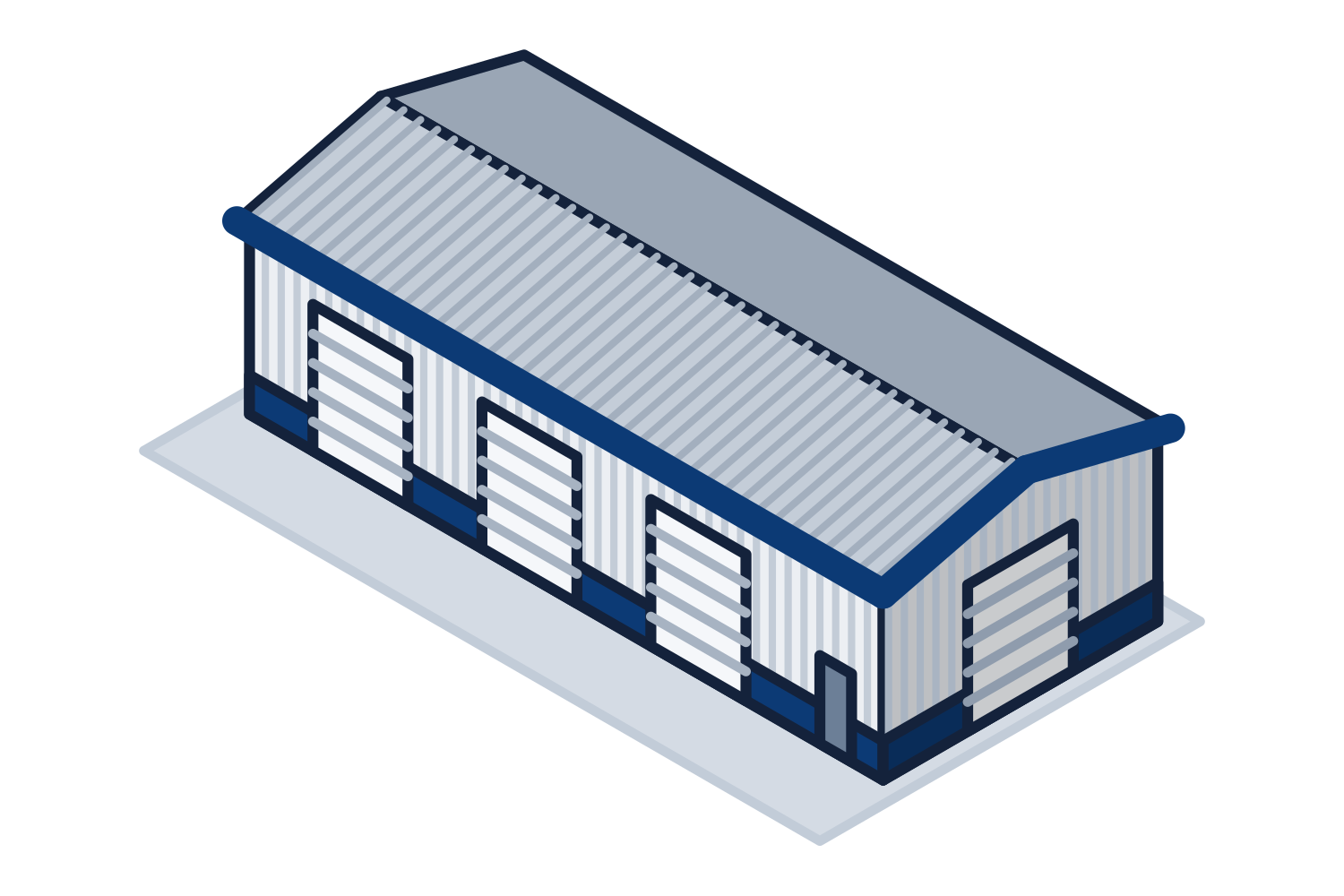
Representative drawing of the equipment type, not the exact configuration quoted.
A comparison sheet you can print
Print this page and fill in one column for each quotation. Empty boxes are the questions to send back.
| Line | What to write down | Why it matters |
|---|---|---|
| Dimensions | Width, length, eave height, roof slope | A different eave height or slope is a different building |
| Code and edition | The code named on the quotation | It must match what the building department has adopted |
| Design loads | Each load and its value | Lower loads mean less steel and a lower price |
| Collateral load | The value, or none | Decides whether sprinklers, ducts, and lights can hang from the roof |
| Frames and bays | Frame type and bay spacing | Affects interior columns, door locations, and the foundation |
| Roof panel | Type, gauge, finish | Standing seam and through-fastened roofs are priced differently |
| Wall panel | Type, gauge, finish, color | Finish and gauge affect price and service life |
| Openings | Count, sizes, and what fills them | Framing only, or the doors and windows too |
| Insulation | Included or not, and the system | Often left off one quotation and included on another |
| Drawings and seal | Which drawings, sealed or not | The permit office may require the seal |
| Freight | Included or not, and the destination | Freight to the job site should be in the number you compare |
| Manufacturer and plant | Who makes it and where it ships from | Tells you who engineers it and who stands behind it |
| Deposit | Amount and when it is due | Know what it pays for and whether it is refundable |
| Price validity | The date the price holds until | Steel prices move |
| Escalation clause | Present or not, and its wording | Decides whether the price can change after you sign |
| Delivery window | As stated, and what starts the clock | Usually runs from approved drawings, not from the deposit |
| Exclusions | The list | Anything not listed as included is yours to buy elsewhere |
Terms to read before the steel building deposit
The deposit is where a quotation becomes a contract. Read the terms as carefully as the price. All of these should be in writing on the quotation or the order documents, not promised on the phone.
- Deposit: the amount, when it is due, what work it starts, and the conditions under which any of it is returned
- Price validity: the date the quoted price expires if you do not order
- Steel building price lock: whether the price is fixed once you order, and what you must do, and by when, to keep it fixed
- Escalation clause: whether the seller can raise the price after the order, what triggers it, and whether there is a limit
- Change orders: how a change you request is priced and how it affects the schedule
- Cancellation: what you owe if you cancel before engineering, after engineering, and after fabrication starts
- Delivery window: what event starts it, and what happens if you are not ready to receive the building
- Storage: any charge if the building is fabricated and you cannot take delivery
Why a metal building price increase after deposit happens
There are honest reasons and avoidable ones. The honest reasons are changes: the permit office required a higher load, the owner added a door or raised the eave, or the order sat past the date the price was held to. Each of those changes the building or the terms.
The avoidable reason is a quotation that was never complete. A price based on assumed loads, with no code edition and no seal, can only go one way when the real requirements arrive. So can a price that leaves out freight, trim, or the framed openings. A complete quotation, checked against the building department's requirements before the deposit, removes most of the surprises.
Read the escalation clause for the rest. If the contract lets the price move with the steel market until the building is released for fabrication, the fastest way to fix the price is to return the approval drawings promptly.
How to level two quotations that used different loads
Do not compare the totals yet. First get the required loads and the code edition from the building department or the structural notes. Then send both suppliers the same written list: dimensions, code, loads, collateral load, panels, openings, insulation, seal, and delivery address. Ask each to requote to that list and to state any exception.
Once both quotations describe the same building, compare what is included, then the terms, then the price. If one supplier will not requote to the stated loads, that tells you something too.
How our quotations are written
A Line Item Supply quotation states the dimensions, the code, the design loads, the panels, each opening, and the exclusions as separate lines. Freight to the job site is included in every quotation. Erection can be quoted as a separate line on request. The foundation is by others and is designed from the column reactions.
Packages are sold through contractors and erectors, so owners should bring their builder or tell us who is building it. The package builder on this site collects the dimensions, openings, and loads step by step, which gives every bidder the same starting point.