Side by side
The comparison below is general. The real answer for your building comes from engineering it for your dimensions and your site's loads, which is what a quotation does.
| Pre-engineered (PEMB) | Cold-formed | |
|---|---|---|
| Primary frame | Welded plate, usually tapered | Roll-formed galvanized sections |
| Best fit | Wide spans, tall eaves, heavy use | Smaller footprints, simple shapes |
| Cranes and heavy collateral loads | Designed into the frames | Generally not the right system |
| Corrosion protection of frames | Shop primer; finish coating optional | Galvanized |
| Field connections | Bolted | Bolted |
| Erection | Crane and an experienced erector | Lighter equipment, smaller crew |
| Freight weight | Heavier | Lighter |
| Roof and wall panels | Same choices | Same choices |
| Typical projects | Plants, warehouses, large shops, hangars | Shops, storage, small commercial, utility |
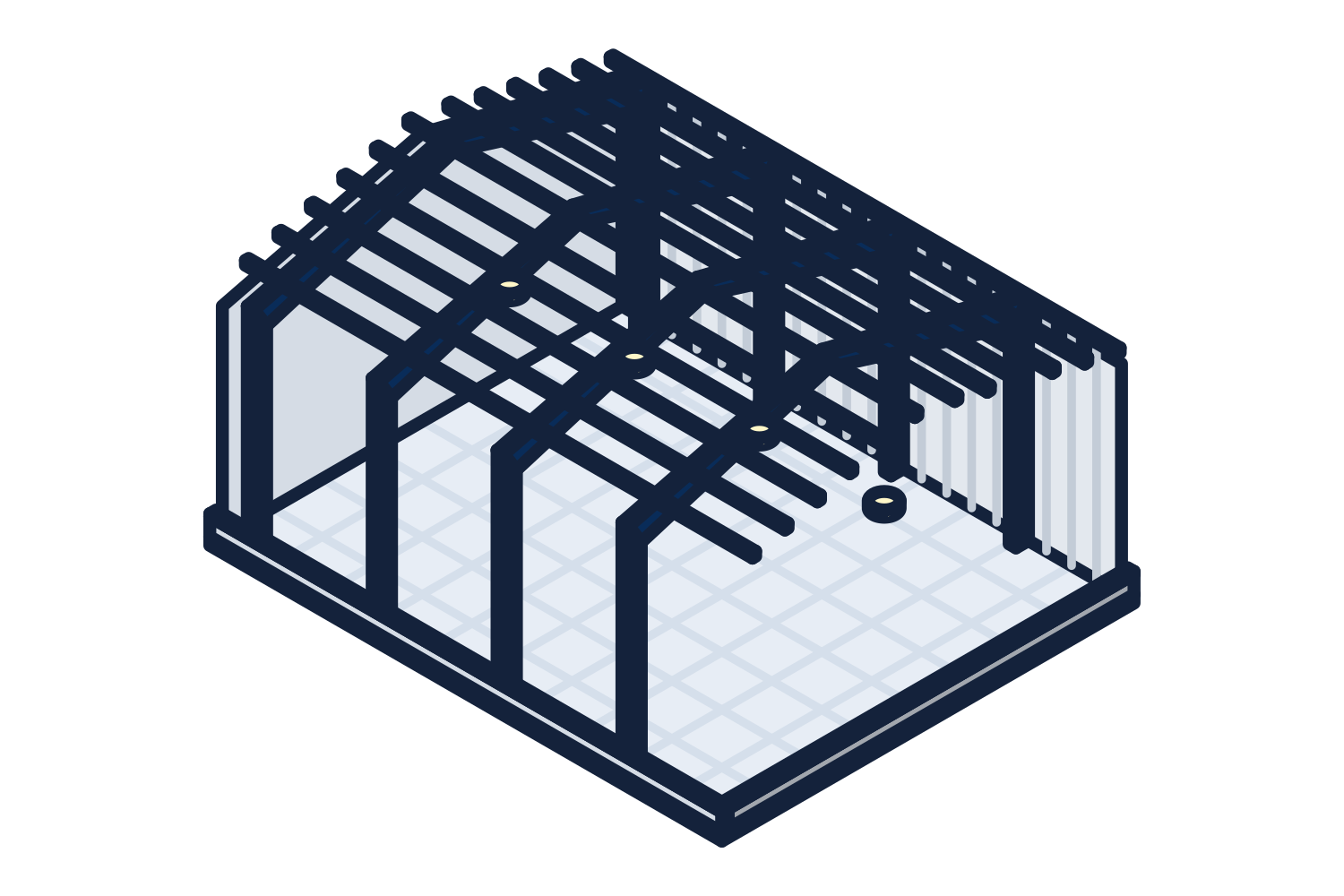
Representative drawing of the equipment type, not the exact configuration quoted.
Three questions that usually decide it
First, how wide is the clear span and how tall is the eave? Second, does the frame carry anything besides the roof: a crane, a mezzanine, heavy rooftop equipment, a deep snow load? Third, who is erecting it and with what equipment? Wide, tall, or loaded points to a rigid frame. Modest, simple, and self-erected points to cold-formed.
If the answers are mixed, ask for both. The quotation shows the two packages for the same footprint so the decision is made on real numbers.