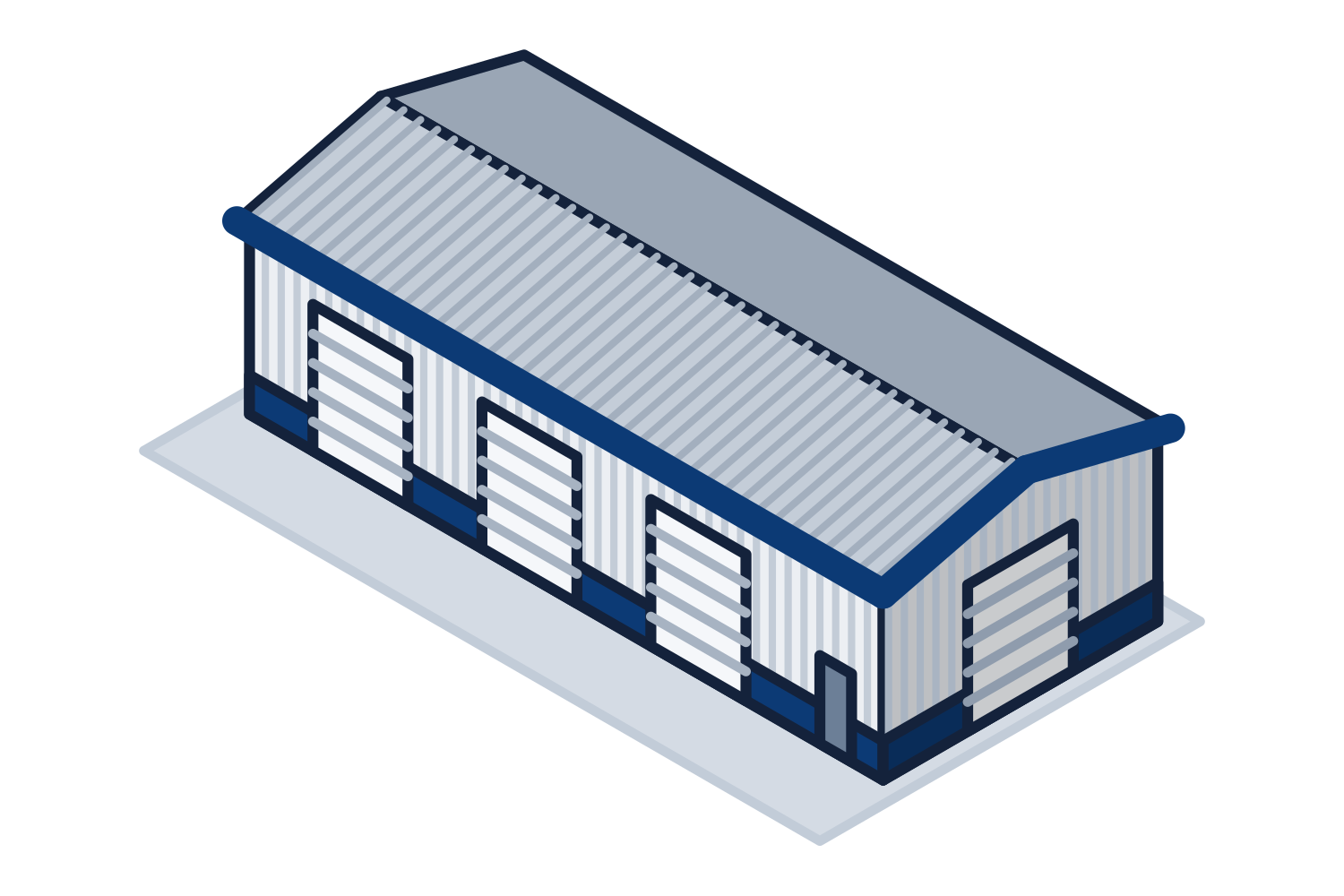
Shape
Width matters more than length. Each foot of clear span makes every frame heavier, while each foot of length just adds another bay of the same frames. A long, narrower building is usually more economical than a short, wide one of the same area. Eave height adds steel to every column and every wall. Allowing interior columns on a very wide building reduces the frame weight substantially.
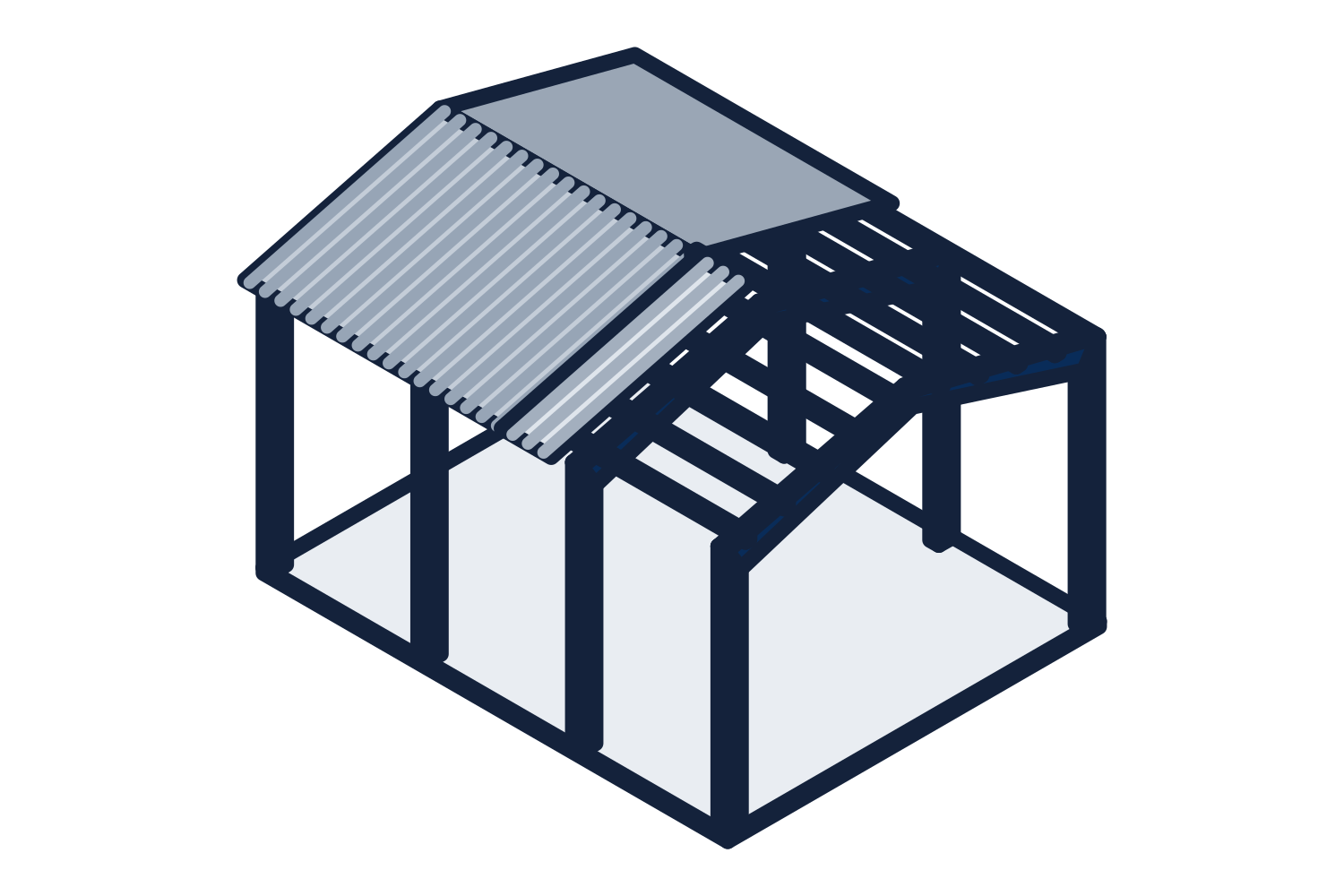
Representative drawing of the equipment type, not the exact configuration quoted.
Loads
The same building costs more where the snow is deep, the wind is strong, or the seismic values are high, because the frames, purlins, and bracing all get heavier. Cranes, mezzanines carried by the building, rooftop equipment, and collateral loads add steel in the same way. Tighter deflection limits for masonry or finished interiors add more.
Openings, panels, and options
Every large opening interrupts the wall framing and bracing and needs its own framing. Panels and options are the other large group of choices.
- Number and size of overhead door openings
- Screw-down roof or standing seam roof
- Panel gauge, profile, and paint system
- Insulation system and liner panels
- Gutters, canopies, overhangs, and lean-tos
- Stamped drawings, where they are an added line
Steel and freight
Steel is a commodity and its price moves. That is why a metal building quotation is valid for a stated period and why we do not publish prices. Freight depends on the weight of the package and the distance from the factory to the job site, and it is included in the quotation.