Plant floor problems · Guardrail
Guardrail, bollards or polymer barriers: which one stops the forklift on your floor?
Reviewed October 16, 2026. Official sources are linked where they exist.
Short answer
Guardrail stops a forklift along a line; a bollard stops it at a point. A continuous run of bolted steel guardrail is the answer where a truck can hit anywhere along a length: walkways, rack ends, walls, equipment rows. Bollards belong where the hazard is a single spot: a door jamb, a column, a panel edge, the corner of a machine. Polymer barriers trade some strength for a rail that flexes and returns, which matters where impacts are frequent and the slab would otherwise be chewed up by re-anchoring. Whatever the material, the only rating that means anything is an ANSI MH31.2 test result with all three numbers: the vehicle weight (9,000, 12,000 or 15,000 lb in the standard's tiers), the speed (3, 5 or 7 mph) and the penetration distance, which must be 24 inches or less to pass. Match the tested weight to your heaviest loaded truck, the speed to what trucks do in that aisle, and the penetration to the clearance you have behind the barrier.
Start with the truck, not the catalog
Every barrier decision begins with the heaviest loaded truck that can reach the spot. A common 5,000 lb capacity sit-down counterbalanced truck weighs roughly 8,000 to 9,000 lb empty and 13,000 to 14,000 lb with a full load on the forks, so a barrier rated for a 9,000 lb test vehicle protects against that truck only when it is empty and slow. Reach trucks and order pickers are lighter but run fast in narrow aisles. Pull the data plates for the fleet and write down the service weight and the rated capacity before anyone quotes a rail.
OSHA does not say where to put a barrier. It requires sufficient safe clearances in aisles, at loading docks, through doorways and wherever turns must be made, and it requires permanent aisles and passageways to be marked (29 CFR 1910.176(a)). Powered industrial truck operation and training are in 29 CFR 1910.178. Barriers are the engineering control that keeps the truck and the pedestrian from meeting; the rule tells you the hazard exists, the barrier is how most plants answer it.
- Heaviest loaded truck that can reach the barrier, from the data plate
- Travel speed in that aisle, honestly measured, not the speed in the policy
- Clearance behind the barrier for the rated penetration distance
- What is behind it: people, product, a wall, a machine, a panel
Guardrail, bollards and polymer, side by side
The three systems answer different problems, and most plants end up with all three. Bolted steel guardrail is formed steel rail on steel posts anchored to the slab, in single rail at about 18 inches to catch forks and counterweights or double rail at 42 inches to also serve as a pedestrian guard. Steel bollards are pipe posts, surface-mounted on a base plate with anchors or core-drilled and set in concrete; their capacity depends as much on the anchors and the slab as on the pipe. Polymer barriers use a reinforced plastic rail or post designed to deflect on impact and return to shape, so the slab and the anchors see less of the load and the barrier rarely needs straightening or repainting.
The ANSI MH31.2 test method from the Protective Guarding Manufacturers Association applies to steel and polymer alike, which is what lets you compare them. A trade publication in 2025 estimated polymer at under 5 percent of US installations, with suppliers arguing the payback comes from avoided repairs; that is a supplier estimate, not an independent finding.
| Bolted steel guardrail | Walkways, rack ends, walls, equipment rows; continuous protection; single rail 18 in or double rail 42 in |
|---|---|
| Steel bollard | Door jambs, columns, panel corners, machine corners, dock door tracks; point protection; capacity set by anchors and slab |
| Polymer barrier | High-frequency impact zones, truck turns, dock aprons; deflects and returns; less slab damage over time |
| Goal posts and dock door guards | Overhead door tracks and jambs at the dock, where a bollard pair plus a header takes the hit |
| Mezzanine and dock edge gates | Fall protection at an edge, not vehicle impact; a different standard and a different question |
Footprint, anchoring and what the slab can take
A guardrail post on a base plate needs four anchors into sound concrete, and the published rating assumes the slab the factory tested on. A thin slab, a slab with a cold joint under the post, or a slab already cracked by prior impacts will not deliver the rated performance. Bollards concentrate the whole load on one post, so a surface-mounted bollard relies even harder on its anchors; an embedded bollard moves that load into the concrete around it but means core drilling and downtime. Polymer systems spread the load through deflection, which is why they are chosen where the same spot gets hit every week.
Footprint matters in a tight aisle. Double rail guardrail takes roughly 6 to 8 inches of aisle width including the post plate, a bollard takes its diameter plus the plate, and polymer rails run a little thicker than steel at the same rating. Lay the barrier out on the floor plan with the truck's turning radius before anyone drills.
What the trade publishes on cost
Dealer publications in 2025 put bolted steel warehouse guardrail at roughly $35 to $80 per linear foot for material, depending on single or double rail, run length and corners, and they note that installation on an occupied floor can approach the cost of the material. Bollards are priced per post and per anchor set, with embedded bollards carrying the core-drill and concrete labor. Polymer runs higher per foot than steel on first cost in most published comparisons, with the supplier case built on lifetime repairs avoided. These are planning ranges from third parties, not our prices.
How we quote it: send a floor photo or a plan with the run marked, the heaviest truck's data plate and what sits behind the barrier. We return a layout drawing, a bill of material in standard rail lengths, posts, anchors and end caps, and a quotation with freight to your dock included. The guardrail builder on this site produces the same bill of material from a few answers if you prefer to start there.
- Steel guardrail, material: roughly $35 to $80 per linear foot in 2025 dealer publications
- Installation on an occupied floor: often close to the material cost in the same sources
- Bollards: per post plus anchors; embedded posts add core drilling and concrete
- Polymer: higher first cost per foot, supplier case built on repairs avoided
Questions buyers ask
- Can a bollard replace guardrail along a walkway?
- No. A bollard protects the spot it occupies; a truck that drifts between two bollards meets nothing. Along a walkway or a rack row the hazard is a line, and the answer is a continuous rail. Bollards are right at jambs, columns and corners.
- What does a 10,000 lb guardrail rating mean?
- By itself, nothing. An ANSI MH31.2 result has three parts: the test vehicle weight, the speed and the penetration distance. Ask for the test report and read all three. A bare weight figure is a catalog claim.
- Is polymer strong enough for a loaded forklift?
- Rated polymer systems are tested to the same MH31.2 method as steel, and several pass at the standard's heavier tiers. The difference is behavior on impact: polymer deflects and returns, steel takes a permanent set and transfers more load to the anchors. Read the rating, then decide by how often the spot is hit.
- Does OSHA require guardrail in a warehouse?
- OSHA requires safe clearances and marked aisles and passageways (1910.176) and covers truck operation and training (1910.178). It does not name a barrier product. The barrier is the recognized way to control the hazard, and your insurer and your incident log usually decide where.
- How much clearance do I leave behind the barrier?
- More than the rated penetration distance. If the test report says 24 inches, a person or a panel 12 inches behind the rail is not protected. Where you cannot get the clearance, you need a barrier with a smaller penetration at your truck's weight and speed.
Do your own research
Official sources first. We link the rule, not a summary of the rule, wherever one exists.
- 29 CFR 1910.176 Handling materials, general (aisles and clearances)
eCFR, US Government Publishing Office
Safe clearances in aisles, at docks and through doorways; permanent aisles marked.
- 29 CFR 1910.178 Powered industrial trucks
eCFR, US Government Publishing Office
Truck operation, training and safe travel rules behind the pedestrian separation question.
- ANSI MH31.2 Test method for industrial barriers
MHI
The standard that rates steel and polymer barriers by vehicle weight, speed and penetration.
- Standardized crash-testing methodology helps purchasers assess different industrial guardrails and barriers
Protective Guarding Manufacturers Association, MHI
Describes the MH31.2 weights, speeds and the 24-inch acceptance criterion.
- As warehouse safety risks rise, polymer guardrails challenge steel
Engineering News-Record
Trade press on polymer versus steel, including the estimate that polymer is under 5 percent of US installations.
- When OSHA regulations do not cover your guarding scenario, refer to ANSI standards
Protective Guarding Manufacturers Association, MHI
How the consensus standards fill the gap where OSHA names the hazard but not the product.
What we quote for this

Guardrail
Heavy-Duty Steel Guardrail System
Bolt-down posts and drop-in rails in standard lengths, single rail at 18" or double rail at 42", safety yellow.
- Configuration
- Single rail (18") or double rail (18" and 42")
- Rail lengths
- 2', 4', 6', 8', 10'
- Rail profile
- Heavy-gauge corrugated steel
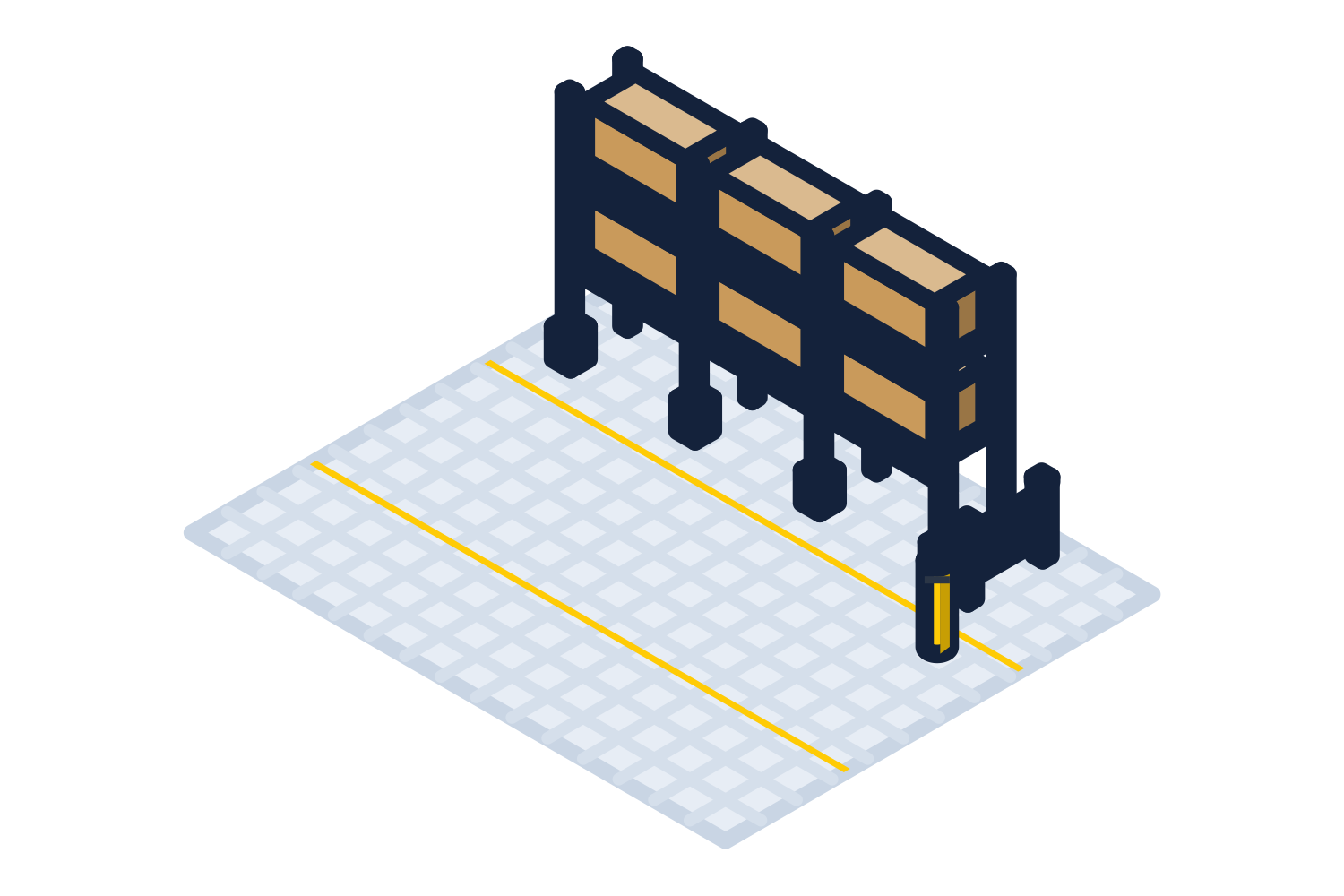
Guardrail
Rack Protection Package: Netting, End-of-Aisle Guards, Column Protectors
Keeps product on the rack and forklifts off the uprights: rack netting, end-of-aisle guardrail, and upright protectors.
- Netting
- Rack-back netting sized to bay width and height
- End-of-aisle
- Guardrail or rack-end guards at each aisle end
- Upright protection
- Column protectors, bolt-down or strap-on
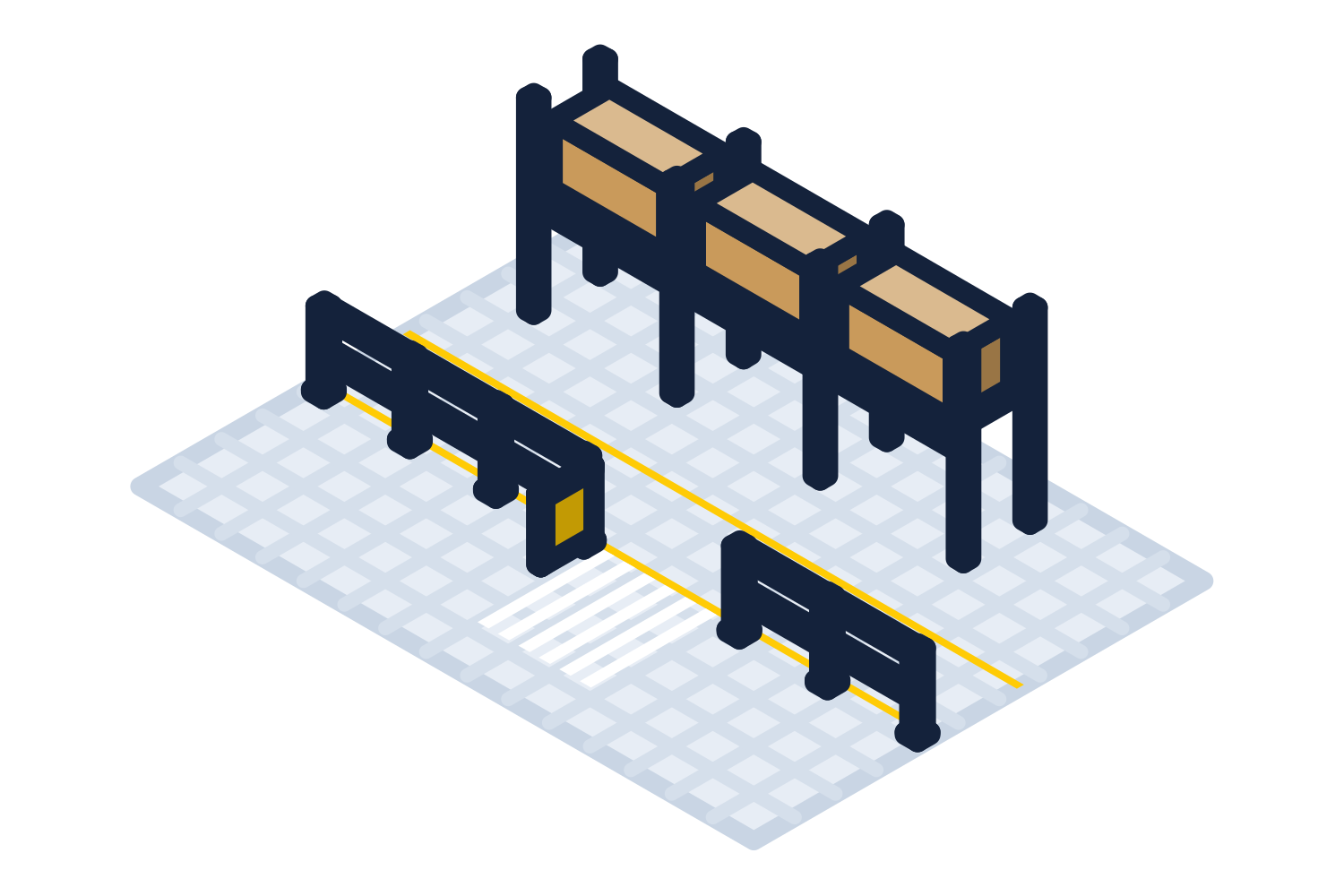
Guardrail
Pedestrian Walkway Kit
Guardrail, swing gates, bollards, and floor marking packaged to separate people from lift trucks along a route.
- Barrier
- Double rail at 42" along the route
- Crossings
- Self-closing swing gates
- Corners
- Bollards at turns and blind corners
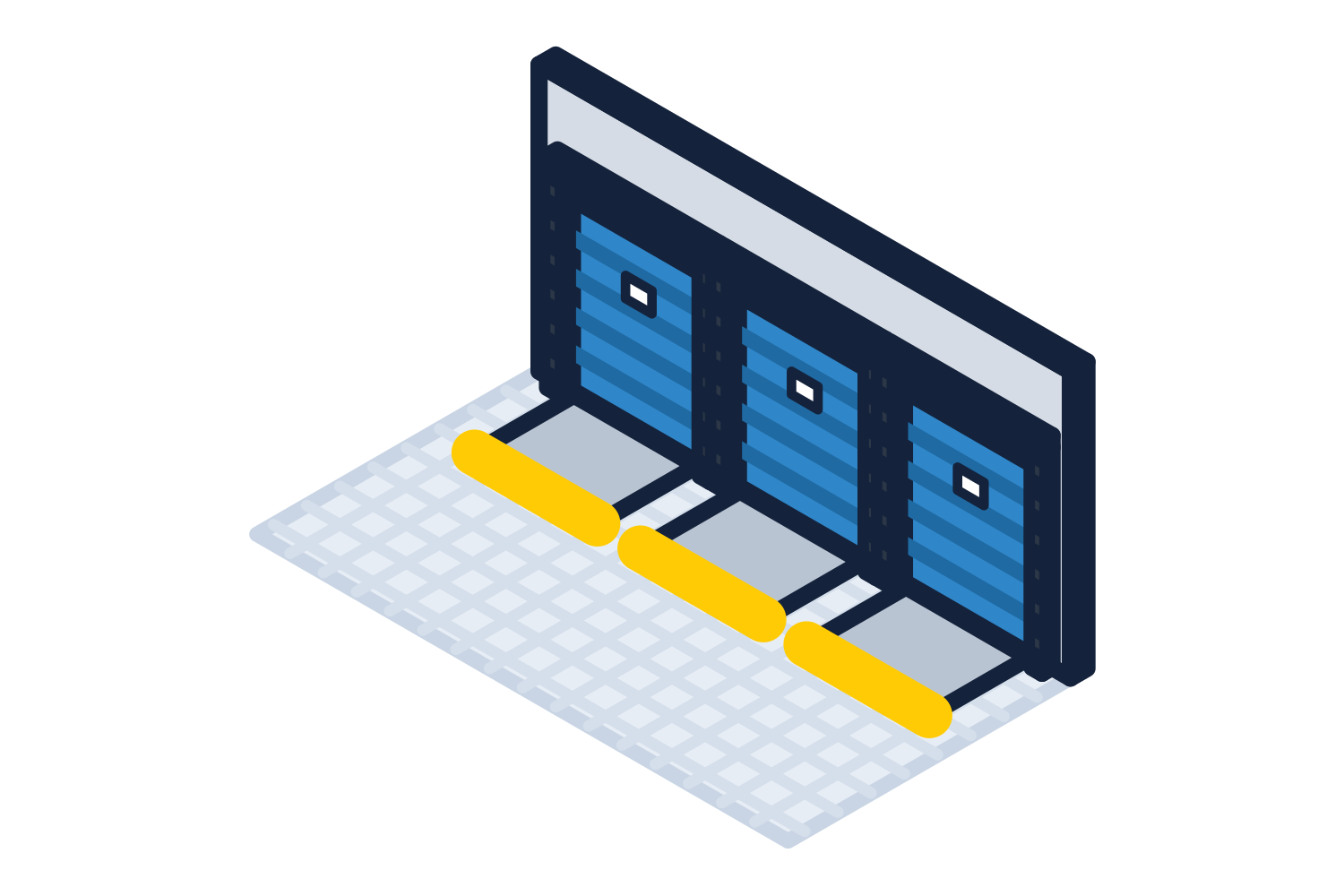
Dock Equipment
Dock Door Protection: Goal Posts, Bumpers, Track Guards
Steel goal-post guards, door track protectors, and bumpers that keep forklifts from taking out the dock door.
- Goal post
- Steel post-and-crossbar guard sized to the door opening
- Track guards
- Bolt-down angle guards on the lower track
- Bumpers
- Laminated or molded, projection per traffic
Work it out
Free calculators for the numbers this decision turns on, each with a guide to the method.
Related guides
- What a Guardrail Impact Rating Means: ANSI MH31.2 Explained
- Separating Pedestrians from Forklifts: What OSHA Expects and What a Walkway Kit Includes
- A Forklift Hit My Pallet Rack: Repair or Replace, and How to Stop the Next One
- Dock Door Protection and Dock Safety: Goal Posts, Bumpers, Edge Gates, and OSHA 1910.26